



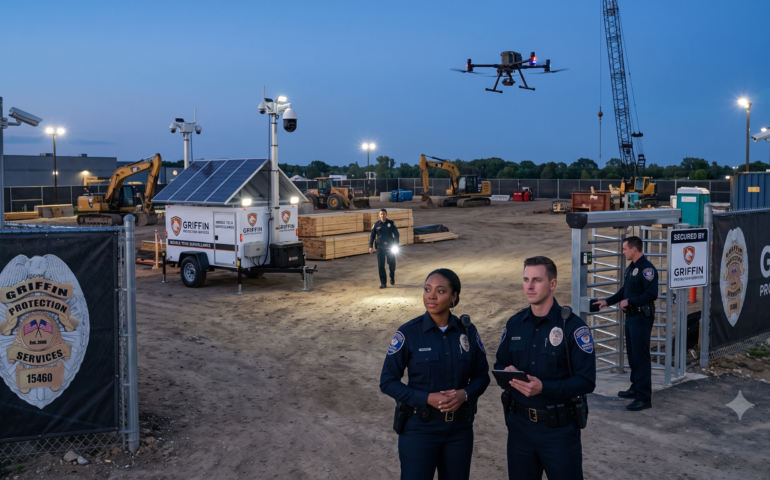
Warehouses are essential to modern business operations, but they can also face a wide range of security risks. Large facilities may store valuable inventory, equipment, vehicles, raw materials, electronics, and other high-value assets. With employees, contractors, delivery drivers, vendors, and visitors entering and leaving throughout the day, maintaining effective warehouse security can become a significant challenge.
Theft, unauthorized access, inventory loss, property damage, and suspicious activity can affect a warehouse’s operations and profitability. A strong security strategy can help businesses reduce these risks while creating a safer environment for employees and visitors.
Professional warehouse security combines trained security personnel, access control, surveillance, patrols, lighting, clear procedures, and ongoing monitoring. The best approach depends on the warehouse’s size, location, operating schedule, inventory value, access points, and specific vulnerabilities.
Here are the best warehouse security practices every business should consider.
Warehouses often contain valuable inventory and equipment concentrated in one location. A single security incident can result in financial losses, operational disruptions, damaged property, and potential safety concerns.
Warehouse security is particularly important for facilities that:
A proactive security strategy helps businesses identify vulnerabilities before they become serious problems.
One of the most effective ways to strengthen warehouse protection is to employ trained warehouse security guards.
A professional security officer can provide a visible presence, monitor activity, control access, conduct patrols, and respond to security concerns.
Depending on the facility’s needs, warehouse security guards may:
Having trained personnel on-site can provide an important layer of protection that technology alone cannot provide.
Warehouses may have multiple entrances, loading docks, employee entrances, emergency exits, and vehicle gates. Controlling these access points is critical.
Businesses should establish clear procedures for determining who can enter the property and which areas they are authorized to access.
Effective access control may include:
Professional security officers can help enforce these procedures and identify individuals who do not have authorization to enter restricted areas.
Loading docks are among the busiest areas of many warehouses. Employees, delivery drivers, vendors, contractors, and vehicles may move through these areas throughout the day.
Without appropriate controls, it can be difficult to maintain visibility over who is entering and leaving with goods or equipment.
Warehouse security procedures should include:
Security personnel can help warehouse management maintain better oversight of these high-traffic areas.
Surveillance cameras can provide valuable visibility throughout a warehouse.
Instead of installing cameras without a clear strategy, businesses should identify areas where monitoring provides the greatest security value.
These may include:
Security cameras can help identify suspicious activity, document incidents, and support investigations.
However, surveillance technology should complement professional security personnel rather than replace human oversight. A trained officer can observe activity in real time, assess potential risks, communicate with management, and follow established response procedures.
Some warehouse inventory is more attractive to thieves than other products. Electronics, tools, pharmaceuticals, luxury goods, valuable materials, and other high-value items may require additional protection.
Businesses can consider:
Combining physical security with inventory controls can make it easier to identify unusual activity and reduce opportunities for unauthorized removal.
Large warehouses can contain expansive interiors, parking areas, loading zones, storage yards, and perimeter spaces. Monitoring all of these locations from a single security post may not be practical.
Regular warehouse security patrols can provide additional visibility across the property.
Patrol officers can check for:
Randomized patrol schedules can also make security coverage less predictable, which may strengthen deterrence.
Adequate lighting is an important part of warehouse security, particularly around exterior areas.
Dark parking lots, loading zones, building entrances, storage yards, and perimeter areas can create visibility challenges.
Businesses should evaluate lighting around:
Well-positioned lighting can improve visibility for security personnel and surveillance cameras while making suspicious activity easier to detect.
Physical security begins with the warehouse itself.
Businesses should regularly inspect doors, gates, fences, windows, and other potential entry points to identify weaknesses.
Security inspections should look for:
Security guards can include these areas in routine patrols and report problems to warehouse management.
Many warehouses operate around the clock, but some have limited staffing during evenings, weekends, and holidays.
Reduced staffing can create additional security challenges.
24/7 warehouse security can provide continuous protection when a facility requires coverage throughout the day and night.
Depending on the warehouse’s needs, after-hours protection may include:
Continuous security can be particularly valuable for facilities that store expensive inventory or operate in areas with elevated security concerns.
Warehouses regularly interact with contractors, suppliers, delivery drivers, maintenance workers, and other visitors.
A clear visitor management process helps businesses maintain better awareness of who is on the property.
Procedures may include:
Security guards can help enforce these procedures and prevent unauthorized individuals from accessing sensitive areas.
Security is not solely the responsibility of security officers or management. Employees also play an important role.
Warehouse employees should understand:
Regular training can help employees recognize potential security concerns and respond appropriately.
Security incidents should be documented consistently.
A detailed incident report can help management understand what happened, when it occurred, where it happened, and what actions were taken.
Security reports may include:
Consistent reporting can help businesses identify recurring security problems and improve their security plans over time.
Some warehouses have extensive outdoor areas, multiple buildings, large parking facilities, or storage yards.
In these situations, mobile patrol security can provide additional coverage.
Mobile security officers can travel throughout the property and inspect multiple areas during scheduled or randomized patrols.
Mobile patrols can be particularly useful for:
They can complement stationary security guards and surveillance systems.
Warehouse operations change over time. Inventory changes, new employees are hired, access points may be modified, and facility layouts can evolve.
A security plan should therefore be reviewed regularly.
Businesses should reassess:
Regular security assessments can help businesses identify new vulnerabilities before they become significant problems.
Hiring professional security personnel can provide several advantages for warehouse operators.
Uniformed security officers create a visible security presence that can discourage unauthorized activity.
Security personnel can help verify employees, visitors, contractors, and delivery personnel.
Regular patrols provide additional visibility across warehouse interiors, loading areas, parking lots, and property perimeters.
An on-site security officer can immediately assess potential security concerns and follow established procedures.
Professional security services can include activity logs and incident reports that provide management with valuable information.
Security coverage can be designed around the warehouse’s size, operating hours, inventory, location, and specific risks.
Selecting the right security provider is an important decision. Businesses should look beyond simply comparing hourly rates and consider the provider’s experience, training, supervision, communication, and ability to customize services.
When evaluating a warehouse security company, consider:
A professional security provider should be willing to evaluate your facility and explain how its services can address your specific vulnerabilities.
Warehouse security requires a combination of proactive planning, technology, physical security, employee awareness, and trained personnel.
From access control and surveillance to security patrols and professional warehouse security guards, businesses can use multiple layers of protection to help reduce security risks and protect valuable inventory and property.
The right solution will depend on the warehouse’s size, location, operating schedule, assets, access points, and security concerns. A professional security assessment can help identify vulnerabilities and determine the appropriate level of coverage.
Griffin Protect provides customized security solutions for warehouses, commercial properties, industrial facilities, and businesses throughout the Bay Area and Northern California.
Need professional warehouse security? Contact Griffin Protect today to discuss your facility’s security requirements and request a customized security solution.
Warehouse security is the combination of personnel, procedures, technology, access controls, patrols, and other measures used to protect a warehouse, its employees, inventory, equipment, and property from security risks.
Professional warehouse security guards can provide visible deterrence, monitor entrances and loading areas, conduct patrols, manage access, document incidents, and respond to security concerns.
Not every warehouse requires continuous security coverage. However, facilities operating around the clock or storing high-value inventory may benefit from 24/7 security services.
Yes. Security officers can monitor employee entrances, visitor access points, vehicle gates, loading docks, and other designated areas according to the facility’s security procedures.
Important practices include professional security guards, access control, surveillance cameras, perimeter protection, adequate lighting, inventory controls, regular patrols, employee training, visitor management, and incident reporting.
Yes. Mobile patrol officers can inspect large warehouse properties, parking areas, storage yards, perimeter areas, and multiple buildings as part of a customized security plan.
Start with a security assessment to identify vulnerable access points, valuable assets, staffing gaps, perimeter weaknesses, and other risks. A professional security company can then develop a customized protection plan.


Warehouse Cargo Theft in the East Bay: Security Measures That Work | Griffin Protection Services
12 Oct 2026[…] For more general guidance, read our warehouse security best practices. […]