



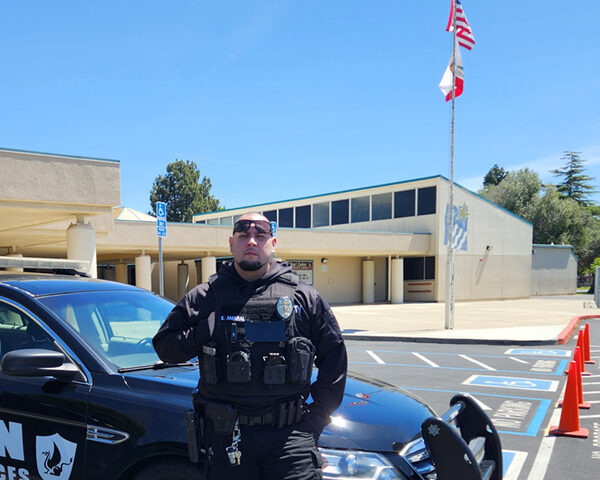
School safety is one of the top concerns for parents and administrators alike, and security guards are often part of the conversation but there’s a lot of misunderstanding about what they actually do, what training they’re required to have, and whether their presence changes the feel of a campus. Here’s a clear, practical look at school security guards in California what the law requires, what a well-run program actually looks like, and what to ask when evaluating security for a school.
It depends on the type of school. California does not universally mandate that every school hire security guards. However:
In both cases, if a school does choose to hire security guards, California law sets specific licensing and training requirements that must be met there’s no lower bar for school-based security work.
This is the area parents and administrators should scrutinize most closely, since it’s the difference between a security program that meets state standards and one that doesn’t.
Every security guard working in California including at schools must hold a valid license issued by the Bureau of Security and Investigative Services (BSIS). This requires passing a state-mandated background check and completing baseline security training.
Beyond the standard guard card, California law requires security guards working in K-12 school districts or community college districts to complete an additional 24-hour school security guard training course, developed by BSIS in consultation with the Commission on Peace Officer Standards and Training. This requirement is set out in Business and Professions Code Section 7583.45 and Education Code Sections 38001.5 and 72330.5.
The course covers:
| Topic | Hours |
|---|---|
| Role and responsibility of a school security officer | 4 |
| Laws and liability | 8 |
| Security awareness in the educational environment | 3 |
| Mediation and conflict resolution | 4 |
| Disasters and emergencies | 1 |
| Dynamics of student behavior | 3 |
| Examination | 1 |
This training exists specifically because school environments require a different skill set than general commercial security de-escalation, awareness of adolescent behavior, and legal boundaries around interacting with minors all require dedicated preparation.
School security guards are generally expected to complete refresher training on a regular basis, ensuring their skills and knowledge of best practices stay current as guidance around school safety evolves.
A common misconception is that a school security guard’s role is primarily about confrontation or enforcement. In practice, a well-trained school security guard’s day-to-day responsibilities typically include:
Importantly, a school security guard is a distinct role from a school resource officer (SRO), who is typically a sworn law enforcement officer. Security guards generally don’t carry arrest powers in the way an SRO does their role is centered on monitoring, prevention, de-escalation, and coordinated response.
This is one of the most common concerns parents raise, and it’s a fair one. The answer largely comes down to the individual guard and how the role is defined.
A poorly integrated security presence someone treated purely as an enforcer can create tension. But a well-trained, well-selected guard is typically described very differently: a consistent, approachable presence who becomes a familiar face on campus, builds trust with students over time, and is seen more as a supportive figure than a disciplinarian. The training requirements above particularly the sections on mediation, conflict resolution, and student behavior exist specifically to support this kind of role.
If you’re evaluating a security provider for a school, consider asking for:
Reviewing actual records rather than accepting a general assurance that “our guards are qualified” is one of the most important steps administrators can take before signing a contract.
Parents don’t need to manage security decisions directly, but it’s reasonable to ask:
Griffin Protect provides trained, BSIS-licensed security personnel to schools across San Jose, Santa Clara, and the greater Bay Area, with guards who meet California’s school-specific training requirements and understand the unique responsibility of working in an educational environment. We work with administrators to design coverage that fits each campus from daily monitoring and access control to coverage for after-hours events while keeping the experience welcoming for students, staff, and families.
Contact Griffin Protect today to discuss a security plan tailored to your school’s Comprehensive School Safety Plan and campus needs.
Are security guards required at California public schools?
California doesn’t universally mandate security guard staffing, but public school districts are required to maintain a Comprehensive School Safety Plan under the Education Code, and security services are commonly part of implementing that plan.
What training do school security guards need in California?
In addition to a standard BSIS guard card, security guards working in K-12 or community college districts must complete a 24-hour school-specific training course covering topics like de-escalation, laws and liability, and student behavior, as required under Business and Professions Code Section 7583.45.
Do school security guards have arrest powers like police officers?
No. School security guards are generally distinct from school resource officers, who are typically sworn law enforcement. Guards focus on monitoring, prevention, de-escalation, and coordinated emergency response rather than law enforcement authority.
Will having a security guard make my child’s school feel unwelcoming?
Not typically, when the guard is well-trained and well-integrated. A guard focused on relationship-building and prevention tends to become a familiar, reassuring presence rather than a source of tension.
Are private schools in California required to hire security guards?
No, private schools aren’t bound by the same state staffing mandates as public districts, though many choose to hire licensed security guards based on risk management, insurance expectations, and family and board priorities.