


Firewalls and passwords protect your data. But what protects your building, equipment, and people when someone walks through an unlocked door at midnight? That is the job of physical security.
In this guide, the Griffin Protection Services team explains what physical security is, how the layered approach works, which controls matter most, and how Bay Area businesses can build a plan that works in practice.
Physical security is the protection of people, property, facilities, and assets from physical threats. These threats include theft, burglary, vandalism, trespassing, workplace violence, terrorism, fire, and natural disasters.
It combines three things:
None of these works well alone. Cameras record a break-in but don’t stop it. A locked door can be propped open. A guard can’t watch every corner at once. Physical security is effective when all three work together.
Physical security affects more than theft prevention:
Professionals design physical security in layers, an approach often called “defense in depth.” The idea is simple: an intruder should have to get past several separate barriers, and each one creates a new chance for detection and response.
This is the outer boundary of your property, including fencing, gates, landscaping, signage, lighting, and vehicle barriers. It sets clear boundaries, discourages casual intruders, and funnels traffic toward controlled entry points. On large open sites, mobile surveillance trailers and patrol officers extend perimeter coverage.
This layer covers doors, windows, loading docks, roofs, and parking areas. Controls include commercial-grade locks, door alarms, exterior cameras, motion lighting, and well-lit parking lots.
Inside the building, security limits movement to authorized areas. This includes badge readers, reception desks, visitor sign-in, interior cameras, and restricted zones.
The innermost layer protects your most sensitive areas, such as server rooms, cash offices, pharmacies, records, and high-value inventory. These spaces get the tightest controls, such as locked cages, safes, multi-factor access, and audit logs.
A common framework for physical security is the 5 D’s. Each layer should do one or more of these jobs:
The key point is timing. Your delay measures should hold an intruder longer than it takes your response to arrive. A camera that detects a break-in is only useful if someone responds before the damage is done.
Physical security controls are often grouped by what they do:
They can also be grouped by type:
Picture an office campus in Santa Clara after hours. Perimeter lighting and signage discourage casual trespassers. A person enters the parking structure, and a camera flags the movement. The patrol officer on a randomized route checks it out, finds someone trying doors, and politely but firmly tells them to leave. The officer then reports the incident to the property manager. If the person resists, the officer calls police and observes from a safe distance. Every layer played a role, and the human response closed the loop.
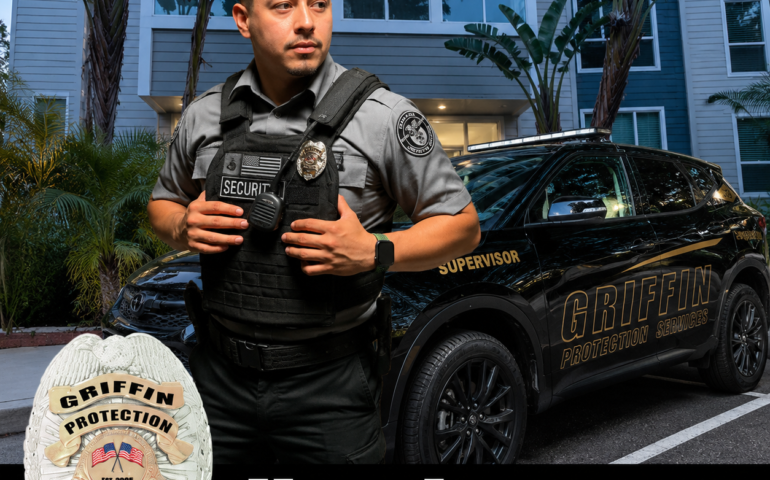
Technology detects problems. People solve them. Griffin Protection Services has provided the human layer of physical security for Bay Area businesses since 2005, with BSIS-licensed officers, patrol vehicles, and mobile surveillance. From commercial properties and construction sites to schools and hotels, we assess your site and build coverage that fits.
What is physical security in simple terms?
It means protecting people, buildings, and assets from real-world threats such as theft, vandalism, and violence, using barriers, technology, and trained personnel.
What are the main layers of physical security?
The perimeter, the building exterior, the building interior, and critical assets.
What are the 5 D’s of physical security?
Deter, detect, delay, deny, and defend (or respond).
How is physical security different from cybersecurity?
Physical security protects tangible spaces and assets. Cybersecurity protects digital systems and data. The two overlap, since a physical breach can easily lead to a data breach.
Are security guards part of physical security?
Yes. Guards provide deterrence, detection, and response, which makes them the human layer that ties the other controls together.
Ready to strengthen your property’s physical security? Request a free security assessment or call 408-330-6003.