



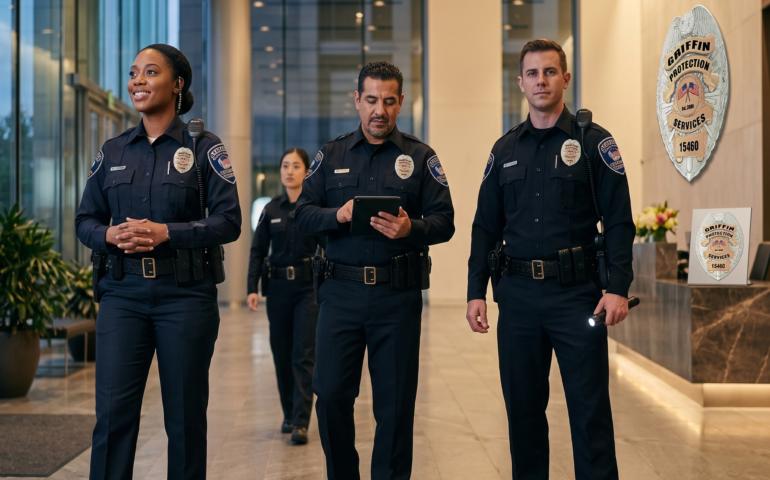
Most security failures aren’t the result of dramatic, unpredictable events they’re the result of small, avoidable mistakes that go unnoticed until an incident forces the issue. Whether you manage an office building, retail center, apartment community, or construction site, understanding these common mistakes is the first step toward fixing them before they cost you.
Here are ten of the most frequent security mistakes businesses make, and how to correct each one.
Many businesses install cameras or hire a guard once and consider the problem solved. But risk factors change constantly new tenants, seasonal traffic shifts, nearby crime trends, renovations. A security plan built for your property five years ago may no longer reflect your actual risk today.
The fix: Review your security plan at least annually, and immediately after any significant incident, renovation, or change in property use.
Businesses frequently guess at their security needs rather than systematically evaluating them, leading to spending on measures that don’t address their actual vulnerabilities while real gaps go unnoticed.
The fix: Conduct a proper site assessment that reviews access points, lighting, past incidents, and local crime data before deciding what security measures to invest in.
Dark parking lots, dim walkways, and unlit entry points are some of the most common and most preventable vulnerabilities. Poor lighting makes it easier for criminal activity to go unnoticed and harder for guards or cameras to be effective.
The fix: Walk your property after dark and identify every area with inadequate lighting, then prioritize fixing those spots.
Businesses often lose track of who actually has access to their building over time — former employees who were never removed from the system, shared codes that never get changed, vendors who come and go without sign-in. This creates an unmonitored trail of access that’s difficult to audit if something goes wrong.
The fix: Regularly review and update access permissions, require sign-in for all visitors and vendors, and revoke access immediately when an employee leaves.
A camera system only helps if footage is actually reviewed and someone responds when something happens. Many businesses install cameras, then treat them as a “set it and forget it” solution, discovering only after an incident that no one was watching or the footage wasn’t stored long enough to be useful.
The fix: Pair camera systems with active monitoring or regular review, and make sure there’s a clear response protocol when something suspicious is flagged.
Businesses often staff security based on business hours rather than actual risk patterns. But many incidents break-ins, vandalism, trespassing happen overnight or on weekends, exactly when coverage tends to be thinnest.
The fix: Use your incident history and risk assessment to align guard coverage or patrol frequency with the hours when incidents are most likely to occur, not simply standard business hours.
Guards and technology can only do so much if employees aren’t trained on basic security protocols how to challenge an unfamiliar person in the building, what to do if an alarm is triggered, or how to report suspicious activity.
The fix: Provide basic security awareness training to staff, and make sure everyone knows the emergency response protocol and who to contact if something seems wrong.
Cost matters, but selecting a security company based solely on the lowest quote without verifying licensing, training standards, insurance, or supervision practices often leads to inconsistent guard quality, high turnover, and gaps in coverage that end up costing far more in the long run.
The fix: Vet security providers on licensing, training, screening, and supervision, not price alone. A slightly higher rate from a well-managed, properly licensed company is almost always the better investment.
Post orders written years ago for a different tenant mix, different building layout, or different risk profile often don’t reflect current conditions, leaving guards working from outdated instructions.
The fix: Review and update post orders whenever your property, tenants, or risk factors change, and involve your security provider in that review.
Even with guards and cameras in place, many businesses lack a clear, documented plan for what happens during a genuine emergency medical incident, fire, active threat including who’s responsible for what and how information gets communicated.
The fix: Develop a written emergency response plan, review it with your security provider and staff, and practice it periodically so everyone knows their role when it matters most.
Most of these mistakes share a common thread: they’re the result of treating security passively rather than proactively. Businesses that avoid these pitfalls tend to share the same habits regular risk assessments, ongoing communication with their security provider, and a willingness to adjust their plan as circumstances change.
Since 2005, Griffin Protection Services has helped businesses across San Jose, Santa Clara, and the greater Bay Area identify and correct exactly these kinds of security gaps. Our team conducts thorough site assessments, builds customized security plans, and provides ongoing supervision and reporting — so these common mistakes don’t become costly incidents on your property.
Contact us today for a free security assessment and find out where your property may be exposed.