



Modern offices are designed to be productive, collaborative workplaces, but they can also face a range of physical security risks. Employees, visitors, contractors, vendors, executives, and service providers may enter and leave throughout the day, creating multiple opportunities for unauthorized access, theft, workplace incidents, and other security concerns.
A strong office security strategy helps businesses identify these risks before they become costly problems. While access-control systems, surveillance cameras, alarms, and other technologies can provide valuable support, professional security personnel can add an important human layer by monitoring activity, managing access, identifying unusual behavior, and responding to incidents.
Office security should also be based on the specific property. A small office may have different vulnerabilities than a multi-floor corporate headquarters, technology campus, or shared commercial building.
Here are 10 common office security risks businesses should prepare for and practical ways to address them.
Unauthorized access is one of the most important physical security concerns for an office.
Someone who enters a building without proper authorization may gain access to employees, equipment, confidential areas, or other business assets. The risk can increase when offices have multiple entrances, shared facilities, or high visitor traffic.
Businesses can strengthen access control by:
Professional office security guards can provide an additional layer of protection by monitoring entrances and identifying individuals who may not have authorization to enter.
Tailgating occurs when an unauthorized person follows an authorized employee through a controlled entrance without independently verifying their access.
It can be difficult to prevent because employees may hold doors open for people they assume are authorized.
Businesses should train employees not to bypass access procedures and should establish clear visitor policies.
Security personnel can also monitor entrances and politely challenge individuals who attempt to enter restricted areas without proper authorization.
Access control technology can help, but human oversight remains valuable when a situation requires judgment or immediate intervention. Current office-security guidance increasingly emphasizes combining access controls with visitor management and active monitoring rather than relying on a single security measure.
Offices may contain computers, laptops, mobile devices, tools, documents, and other valuable equipment.
Theft can occur through unauthorized entry, insider access, unsecured areas, or individuals posing as employees, contractors, or visitors.
Businesses can reduce exposure by:
A visible security presence can also discourage opportunistic theft and provide employees with a point of contact when suspicious activity occurs.
Visitors and contractors are a normal part of office operations. However, businesses should know who is entering the building, why they are there, and which areas they are authorized to access.
Without an effective visitor management process, an office may have limited visibility into who is on the property.
A practical visitor security process can include:
Security officers can support these procedures by monitoring entrances, assisting visitors, and enforcing access policies consistently.
Offices can occasionally experience aggressive behavior, disputes, threats, or other situations that may create safety concerns for employees and visitors.
Businesses should have clear procedures for reporting and responding to concerning behavior.
Security personnel can provide an additional layer of support by monitoring the workplace, identifying escalating situations, controlling access when necessary, and following established emergency procedures.
The objective is not simply to react to an incident. A professional security presence can help identify potential concerns early and provide a controlled point of response.
Businesses should also ensure employees know how to report security concerns and whom to contact during an emergency.
Not every employee or visitor needs access to every part of an office.
Server rooms, executive offices, storage areas, research facilities, records rooms, and other sensitive spaces may require additional controls.
Businesses should consider separating general office access from restricted-area access.
Security measures can include:
Regularly reviewing access permissions is also important. Former employees, contractors, or employees who have changed roles should not retain unnecessary access.
Security concerns do not stop at the office entrance.
Parking lots, garages, walkways, loading areas, and building perimeters can also require monitoring. Employees may arrive early or leave late when fewer people are present, increasing the importance of visibility and appropriate lighting.
Businesses can improve exterior security through:
For larger office campuses, mobile patrol security can provide broader coverage across parking areas and building perimeters.
Security planning should account for both external and internal risks.
Employees and contractors may legitimately have access to buildings and business assets, but access should still be appropriate to their roles.
Businesses can reduce unnecessary exposure by using:
When an employee or contractor leaves a company, physical and electronic access should be removed promptly according to the organization’s procedures.
Professional security officers can also help monitor physical access and report unusual activity.
Many offices have significantly fewer employees during evenings, weekends, and holidays. This can create security gaps if access points, parking areas, and building perimeters are not monitored.
Businesses operating outside standard working hours should determine whether they require:
For businesses with valuable equipment, sensitive facilities, or large properties, continuous commercial security services may provide an additional layer of protection.
The appropriate coverage depends on the property’s risk profile and operating schedule.
Even a well-protected office can experience an unexpected security incident. What matters is whether employees and security personnel know how to respond.
A strong office security plan should define procedures for situations such as:
Security officers should understand their responsibilities and know how to communicate incidents to appropriate management or emergency services.
Incident reporting is also important. Documenting what happened, when it happened, where it occurred, and what actions were taken can help businesses identify recurring vulnerabilities and improve their security procedures.
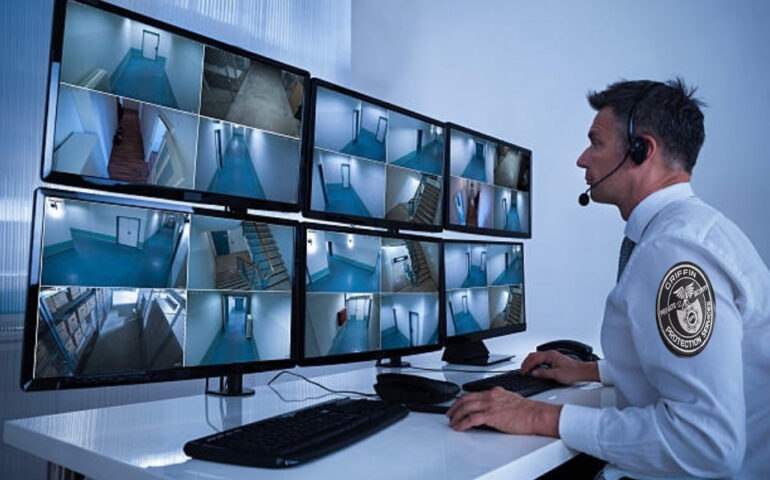
Technology is an important part of modern office security, but it does not eliminate the need for trained personnel.
A camera can capture an event. An access-control system can deny an unauthorized credential. An alarm can signal a potential problem.
A trained security officer can combine those signals with real-time observation and judgment.
Professional office security guards can help with:
This combination of people, procedures, and technology can create a more comprehensive security strategy.
Every office has different security requirements, so businesses should begin with an assessment rather than automatically adopting the same measures used by another company.
Consider these questions:
Identify employees, visitors, equipment, confidential areas, inventory, facilities, and other assets that require protection.
Review entrances, exits, parking areas, loading zones, restricted rooms, and isolated areas.
Determine whether concerns are more likely during business hours, shift changes, evenings, weekends, or holidays.
Define which employees, contractors, vendors, and visitors require access to specific areas.
Establish clear reporting, escalation, communication, and emergency procedures.
A professional security company can help businesses evaluate these factors and develop a customized security program.
Office security is not simply about preventing theft. It is about protecting people, property, operations, and the workplace environment.
A security incident can disrupt productivity, damage property, affect employee confidence, and create unexpected costs. Proactive security planning allows businesses to identify vulnerabilities and establish procedures before an incident occurs.
The strongest security programs typically combine multiple layers, including access control, visitor management, surveillance, lighting, employee awareness, patrols, and trained security personnel.
Every office has different security risks, and a generic approach may leave important vulnerabilities unaddressed.
Whether your business operates a small office, corporate headquarters, technology facility, commercial building, or large office campus, professional security personnel can provide an additional layer of protection.
Griffin Protect provides customized office security services designed around the specific requirements of businesses and commercial properties throughout the Bay Area and Northern California. Security coverage can include access control, visitor monitoring, patrols, incident reporting, and other protective services based on the property’s needs.
Looking for professional office security guards? Contact Griffin Protect today to discuss your workplace security requirements and request a customized security solution.
Common risks include unauthorized access, tailgating, theft, visitor-management issues, workplace disturbances, restricted-area access, parking-lot concerns, internal security risks, after-hours vulnerabilities, and inadequate incident response.
Security guards can monitor entrances, manage visitors, conduct patrols, identify suspicious activity, support access-control procedures, document incidents, and provide an immediate security presence.
Not every office requires the same level of security. The appropriate solution depends on factors such as location, building size, operating hours, employee and visitor traffic, valuable assets, and specific security risks.
Yes. Security coverage can be scheduled around the needs of the business, including daytime, overnight, weekend, holiday, or continuous 24/7 protection.
An office security plan should address access control, visitor management, restricted areas, surveillance, patrols, emergency procedures, incident reporting, employee responsibilities, and after-hours security.
Look for a professional provider with appropriately licensed and trained officers, relevant commercial security experience, reliable supervision, clear reporting procedures, flexible coverage, and the ability to customize services to your property.