



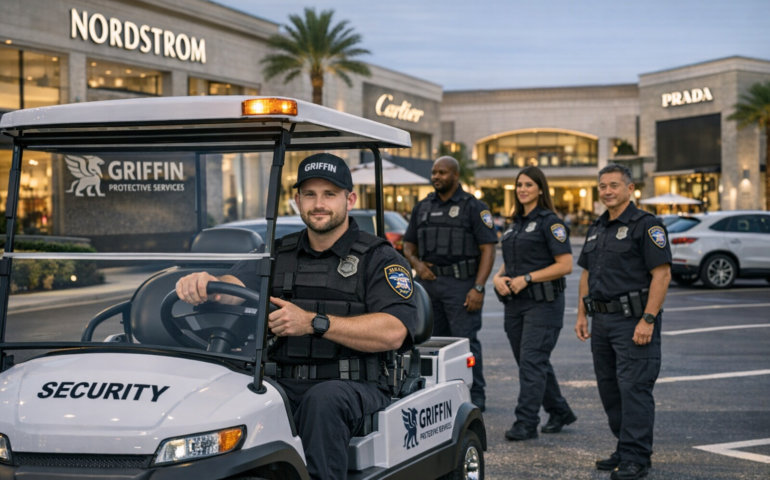
For most shopping centers, the parking lot is the first and last place a visitor experiences during every trip, and it’s also one of the highest-risk areas on the entire property. Poor lighting, low visibility, and large open spaces make parking lots a common target for theft, vandalism, and other incidents, and when something does go wrong, shopping center owners often face significant liability exposure on top of the immediate safety concern.
This guide outlines practical parking lot safety strategies every shopping center owner should consider, along with how professional security support can help reduce risk. At Griffin Protect, our shopping center security and parking lot security services are built specifically around these kinds of high-traffic retail environments.
Shopping center parking lots present a combination of risk factors that don’t exist in the same way inside the stores themselves:
Because of these factors, parking lots are one of the most common locations for retail-related theft, vehicle break-ins, and slip-and-fall incidents, making proactive safety measures especially important.
Poor lighting is one of the single biggest contributors to parking lot crime. Dimly lit areas provide cover for theft, vandalism, and other incidents, while also increasing the risk of trip-and-fall accidents. Conduct regular lighting audits, especially during darker winter months, and promptly repair or replace any burned-out or malfunctioning fixtures.
Overgrown landscaping, poorly placed signage, or large parked vehicles like delivery trucks can create blind spots that reduce visibility for both security personnel and visitors. Regularly review your property for areas where sightlines have become obstructed and address them proactively.
Cameras serve two important functions: deterring crime through visible presence and providing documentation if an incident does occur. Ensure camera coverage extends across the entire lot, not just entrances, and confirm that cameras are regularly maintained and monitored rather than simply installed and forgotten.
A visible, professional security presence is one of the strongest deterrents against parking lot crime. Regular patrols, especially during high-traffic hours and after dark, signal to potential offenders that the property is actively monitored, while also giving shoppers a greater sense of safety.
Beyond crime prevention, parking lot safety includes reducing the risk of accidents. Cracked pavement, faded lane markings, and unclear signage can all contribute to vehicle accidents and pedestrian injuries. Regular maintenance inspections help identify these hazards before they lead to a liability claim.
Poorly defined walkways force pedestrians to navigate through active vehicle lanes, increasing accident risk. Clearly marked crosswalks, curb cuts, and pedestrian pathways help separate foot traffic from vehicle movement throughout the lot.
Simple signage reminding shoppers to lock their vehicles and avoid leaving valuables visible can meaningfully reduce opportunistic theft, particularly during high-traffic shopping seasons.
Holiday shopping seasons, weekend evenings, and periods of increased foot traffic typically see a corresponding rise in parking lot incidents. Increasing patrol frequency and camera monitoring during these periods can help offset the elevated risk.
Make it easy for shoppers and tenants to report safety concerns, suspicious activity, or incidents. Clear reporting procedures not only help address problems quickly but also create documentation that can be valuable for liability purposes.
Shopping centers often involve multiple tenants and stakeholders. Establishing clear communication between security personnel, property management, and individual businesses helps ensure that safety concerns are addressed consistently across the entire property, not just within individual storefronts.
While lighting, signage, and maintenance address many structural risk factors, an active security presence remains one of the most effective tools for parking lot safety. Professional security services can include:
Beyond the immediate safety benefits, a well-maintained and actively monitored parking lot significantly reduces a shopping center’s liability exposure. Documented patrols, maintained lighting and pavement, and clear incident reporting all create a record demonstrating that reasonable safety measures were in place, which can be an important factor if a liability claim does arise.
What time of day are shopping center parking lots most at risk?
Early morning, evening, and nighttime hours typically see the highest risk, largely due to reduced visibility and lower foot traffic compared to peak daytime hours.
How often should shopping center parking lots be patrolled?
This depends on the size of the lot, foot traffic patterns, and any recent incident history, but many shopping centers benefit from increased patrol frequency during evening hours and high-traffic seasons.
Can better lighting alone significantly reduce parking lot crime?
Improved lighting is one of the most effective and cost-efficient safety improvements, though it works best when combined with active patrols and camera monitoring rather than as a standalone solution.
Who is typically responsible for parking lot safety in a shopping center with multiple tenants?
This is usually addressed in lease agreements, but property management or ownership generally holds primary responsibility for common area safety, including the parking lot, regardless of individual tenant responsibilities.
A safer parking lot protects your visitors, your tenants, and your liability exposure. At Griffin Protect, our shopping center and parking lot security services are designed to address exactly these risks across Bay Area retail properties.
Contact Griffin Protect today to schedule a safety assessment of your shopping center’s parking lot.