


The Bay Area is a landscape of contrasts. From the bustling tech corridors of San Jose and the dense urban density of San Francisco to the sprawling industrial parks of Oakland and the quiet, gated residential communities of Napa and Sonoma, security needs vary dramatically. For many property managers, business owners, and community leaders, a traditional static guard at a single entry point simply isn’t enough.
This is where Mobile Patrol Security Services have become an indispensable asset. As crime patterns evolve—from catalytic converter thefts to overnight cargo theft and transient encampment issues—the need for a flexible, visible, and unpredictable security presence has never been greater. In this guide, we will explore why mobile patrol is the smartest security investment for Bay Area properties, what these guards actually do, and how to choose the right provider for your specific needs.
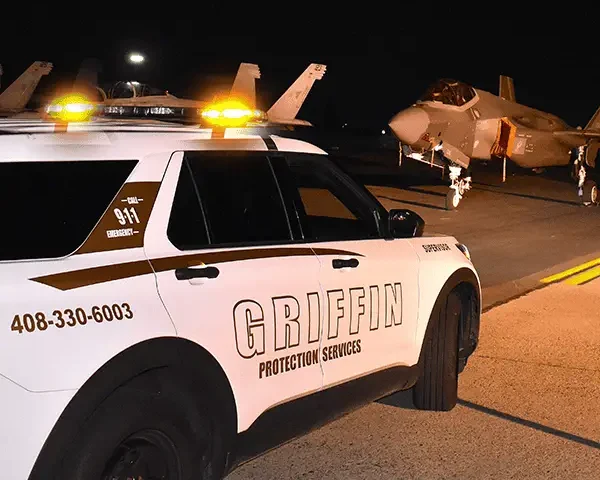
Unlike a stationary security guard who sits at a lobby desk or a checkpoint booth, mobile patrol security involves trained, licensed officers who travel between designated properties in marked or discreet vehicles. These professionals conduct routine inspections, monitor for suspicious activity, and serve as a rapid response unit for multiple locations within a specific geographic radius.
Think of mobile patrol as the “eyes and ears” on wheels for your entire portfolio. If you own a strip mall in Hayward, a warehouse in Fremont, and a parking garage in Berkeley, a single mobile patrol unit can cover all three assets in one shift, stopping at each location at random intervals. Mobile patrol security services in the Bay Area have been specifically adapted to handle the region’s unique challenges, including high-density traffic, earthquake-prone infrastructure, and specific local ordinances regarding trespassing and loitering.
The Bay Area’s post-pandemic landscape has shifted. With hybrid work models keeping many office buildings partially empty, and retail facing “smash-and-grab” trends, criminals are looking for patterns. A static guard at a fixed post offers a predictable challenge. In contrast, mobile patrol introduces a critical element of unpredictability.
Statistics from the San Francisco Police Department and local security audits consistently show that visible, moving patrol vehicles reduce opportunistic crime by up to 60%. When a thief casing a parking lot sees a marked security vehicle driving slowly through the aisles, they know the timeline for their crime is compressed. They cannot be sure if the guard will return in five minutes or twenty. This anxiety forces them to move on to softer targets.
A single mobile patrol unit can typically cover between 15 to 30 locations in an eight-hour shift, depending on distance. This is physically impossible for static guards. For homeowners’ associations (HOAs) with multiple entrances or industrial parks with shared loading docks, this wide coverage ensures no blind spot remains unchecked for long.
While Hollywood often portrays security as simply “driving around,” professional mobile patrol officers perform a rigorous checklist of duties. When you hire mobile patrol security services in the Bay Area, you are paying for active risk management, not just transportation.
The magic is in the mix. Good providers combine predictable “must-do” checks (closing gates at 10 PM) with truly random drive-throughs. This prevents anyone from timing the guard’s route.
Guards physically check doors, windows, gates, and loading bay seals. In Bay Area tech offices, this might include server room locks. In retail, it includes checking dumpster enclosures (a common site for fire starts).
Parking lots are the number one location for vehicle burglaries in cities like Oakland and San Francisco. Mobile patrol guards look for broken glass, suspicious vehicles running with lights off, or individuals pulling on door handles.
When your motion sensor trips at 2 AM, sending a private security guard via mobile patrol is often faster than waiting for police response times, which can be delayed due to regional staffing shortages. The guard can verify if it’s a false alarm or a genuine breach.
Modern mobile patrol uses digital reporting apps. They take time-stamped photos of hazards (e.g., a broken fence or a leaking pipe), log license plates of suspicious vehicles, and provide a “Guard Tour Report” the next morning.
A specific need in the Bay Area involves managing interactions with unhoused individuals. Trained mobile patrol guards can perform “welfare checks” and ask individuals to vacate private property legally and respectfully, avoiding the liability of a business owner doing it themselves.
Why switch from static guards or just cameras? The advantages of mobile patrol security services in the Bay Area are quantifiable and operationally significant.
Full-time static guards cost roughly $20–$35 per hour, plus benefits, overtime, and supervision. For a 24/7 post, that’s easily over $200,000 annually for a single location. A mobile patrol unit that covers five different clients costs significantly less per client, allowing you to get professional security for a fraction of the price of a dedicated guard.
Marked vehicles with light bars create a psychological barrier. For residential communities, seeing a patrol car roll through the cul-de-sac at 11 PM reassures residents and discourages porch pirates.
Mobile units are, by definition, mobile. If a disturbance occurs at your property, the guard can be rerouted from a nearby location to intervene within minutes. Static guards cannot leave their post, and remote cameras cannot physically intervene.
Slip and falls, vandalism, and squatting create massive legal exposure. Regular mobile patrol logs prove “reasonable care” was taken to inspect the property. If someone breaks a window at 3 AM and the patrol log shows a guard passed by at 2:55 AM and 3:05 AM, your liability insurance rates benefit from that diligence.
Different sectors utilize mobile patrol in unique ways:
Gone are the days of a guard scribbling in a notebook. Top-tier mobile patrol security services in the Bay Area now integrate:
Not all patrol services are equal. When vetting a company, ask these specific questions:
As we look toward the rest of the decade, mobile patrol is evolving. We are seeing the rise of “Hybrid Patrols” where a human guard drives a vehicle equipped with a drone. When an alarm triggers in a large junkyard or solar farm, the guard stays at the perimeter while launching a drone to scout the interior, reducing risk to the officer while increasing coverage.
Furthermore, with the Bay Area’s commitment to green energy, many patrol fleets are switching to electric vehicles (EVs) like Teslas or Ford Lightnings, allowing for silent, stealth patrols that don’t disturb residential neighborhoods while still providing robust security.