



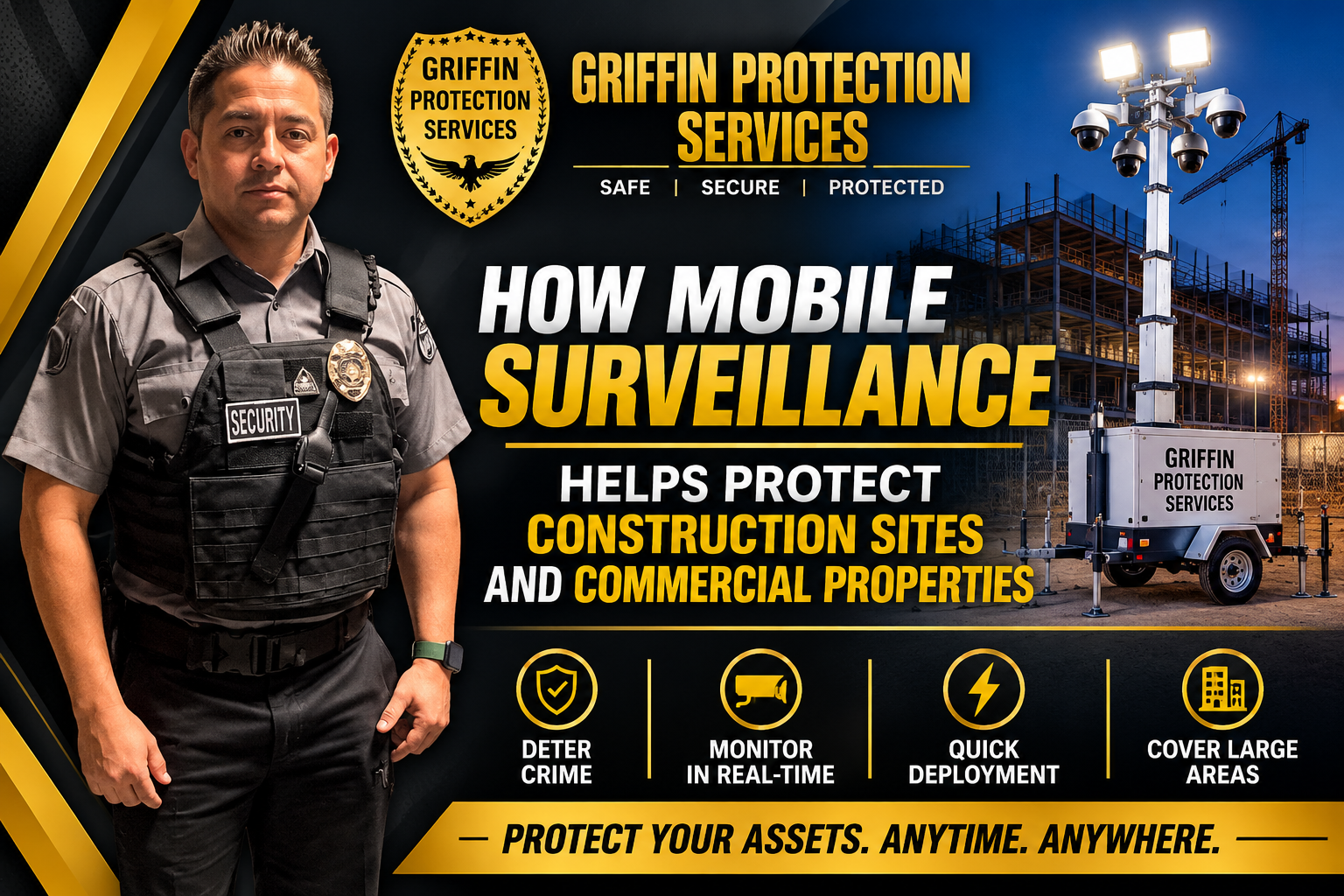
Some properties can’t rely on permanent cameras and wiring. Construction sites change every week, vacant lots have no infrastructure, and commercial properties sometimes need extra protection fast. Mobile surveillance solves this by bringing a complete security system to wherever the risk is.
This guide explains how mobile surveillance works, where it helps most, and how to get the best results.
Mobile surveillance uses self-contained, relocatable units, often trailers or towers, equipped with high-definition cameras, bright lighting, and sometimes speakers and sensors. Most run on solar power, batteries, or generators and connect through cellular networks, so they don’t need electrical or internet hookups.
The units are typically monitored remotely, and trained operators can watch the live feed, detect suspicious activity, and respond right away.
This process turns passive recording into active protection.
Units can often be deployed quickly without trenching, cabling, or permits for permanent installation. That makes them ideal for temporary projects or urgent security needs.
A visible tower with bright lights and signage tells intruders the site is being watched. Many criminals choose to move on before attempting anything.
Unlike basic cameras, monitored units let operators speak directly to trespassers and call for help while an incident is unfolding. This can stop theft before it causes losses.
Remote lots, early-stage construction, and properties without power or internet can still be covered.
As a project moves through phases, the unit can be repositioned to protect the highest-risk areas, such as material storage or equipment yards.
HD video with time stamps supports police reports, insurance claims, and dispute resolution.
Mobile surveillance can reduce the need for round-the-clock on-site staffing while still providing strong coverage, especially overnight and on weekends.
Construction sites are frequent targets for theft of tools, copper, materials, and heavy equipment. Mobile surveillance covers open, changing layouts and protects the site after crews leave. For more strategies, see our guide to construction site security in the Bay Area.
Shopping centers, office parks, warehouses, and parking lots can use mobile units to address specific problems such as vehicle break-ins, loitering, or after-hours trespassing.
Empty properties attract squatters, vandals, and illegal dumping. Surveillance gives owners eyes on the site without a permanent presence.
Large outdoor inventories of vehicles, trailers, or equipment benefit from wide-area coverage and live monitoring.
Mobile units can be used for events, short-term projects, or areas with a sudden security concern.
When comparing mobile surveillance providers, consider:
Pricing depends on the equipment, location, monitoring level, and length of the rental or contract. Most providers charge a monthly fee that may include the unit, setup, and monitoring. Costs generally fall well below the price of continuous on-site guards, though they vary by provider and specifications. For comparison, see our breakdown of security guard costs in San Jose.
To get an accurate quote, a provider will usually consider:
Position units strategically. Place them to cover entrances, perimeters, and high-value areas, with clear sightlines and minimal obstructions.
Post visible signage. Warning signs increase deterrence.
Combine with other measures. Fencing, lighting, and access control make intrusions harder, and mobile security patrols add a physical response when needed.
Define response procedures. Agree in advance on who gets contacted, when police are called, and how incidents are reported.
Review reports regularly. Look for patterns, such as repeated activity at certain times, and adjust coverage accordingly.
Move units as the site evolves. Reassess placement at each project phase.
| Feature | Mobile surveillance | Fixed cameras | On-site guards |
|---|---|---|---|
| Setup time | Fast | Slower | Quick |
| Relocatable | Yes | No | Yes |
| Live intervention | Yes, with monitoring | Only if monitored | Yes |
| Cost | Moderate | Low to moderate | Higher |
| Works without power or internet | Yes | Usually no | Yes |
Each option has a role. Many properties get the best results from a layered approach. Our post on security guards vs. security cameras explains how to combine them.
Mobile surveillance gives construction sites and commercial properties flexible, visible, and proactive protection, without the cost and limits of permanent installations. With live monitoring and smart placement, it can deter crime, speed up response, and provide evidence when you need it.
If you want to protect your site, Griffin Protect can recommend a security plan tailored to your property and budget. Contact Griffin Protect today to request an assessment and quote.